

For coffee lovers around the world, the pour over method is one of the most favored brewing techniques. It offers unparalleled control over the brewing process and allows for a rich, flavorful cup.
However, despite its simplicity, achieving the perfect cup of pour over coffee can often be tricky, especially when it comes to determining the right pour over coffee ratio. Get the ratio wrong, and you might end up with coffee that’s too bitter, too weak, or simply lacking in flavor.
The key to a successful pour over brew lies in understanding the right balance between the coffee grounds and water. In this guide, we will dive deep into the concept of pour over coffee ratio. Whether you’re a beginner or a seasoned coffee enthusiast, this article will provide you with all the insights you need to brew the perfect cup every time.
We will cover various measurements like pour over coffee ratio tbsp, pour over coffee ratio grams, and others, ensuring that you can easily replicate your favorite coffeehouse brew in the comfort of your own home.
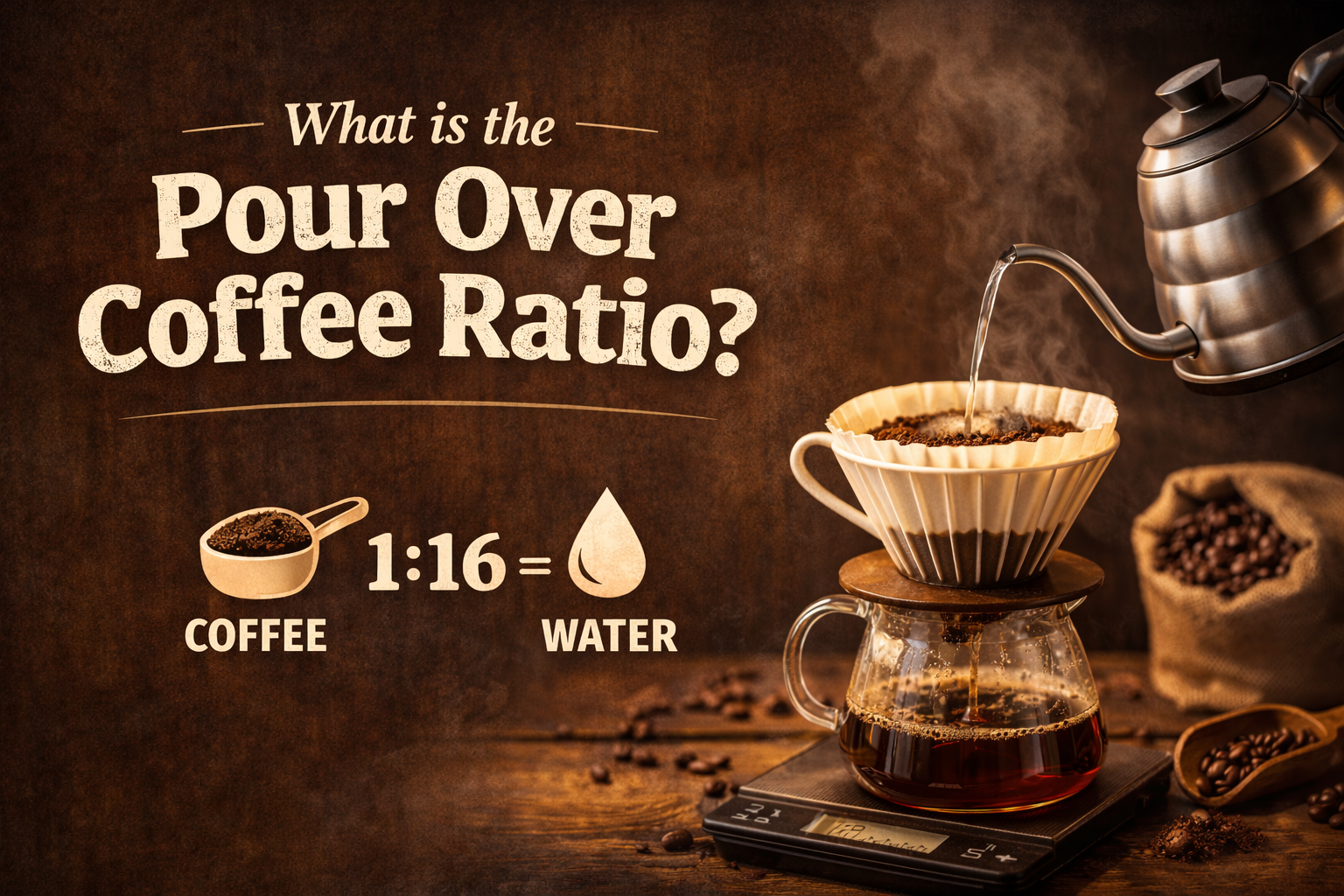
The pour over coffee ratio is the relationship between the amount of coffee you use and the amount of water you add. This ratio directly influences the taste, strength, and overall quality of your coffee. If you use too much coffee for too little water, your brew will be overly strong and potentially bitter. On the other hand, if you use too little coffee, your coffee will taste weak and underwhelming.
While the ideal pour over coffee ratio may vary based on individual preferences, a general starting point is the 1:16 ratio (1 part coffee to 16 parts water). This ratio provides a well balanced brew, neither too strong nor too weak.
However, as with all things in coffee brewing, the perfect ratio can depend on several factors, including the type of beans, their grind size, and your personal taste preferences. Some coffee enthusiasts might prefer a stronger brew, opting for a 1:14 ratio, while others may prefer something milder and go with a 1:18 ratio.
Getting the ratio right is essential, as it determines how the water extracts flavors from the coffee grounds during the brewing process. A precise ratio ensures a more consistent and enjoyable cup of coffee, making your pour over brew something you can rely on every time.
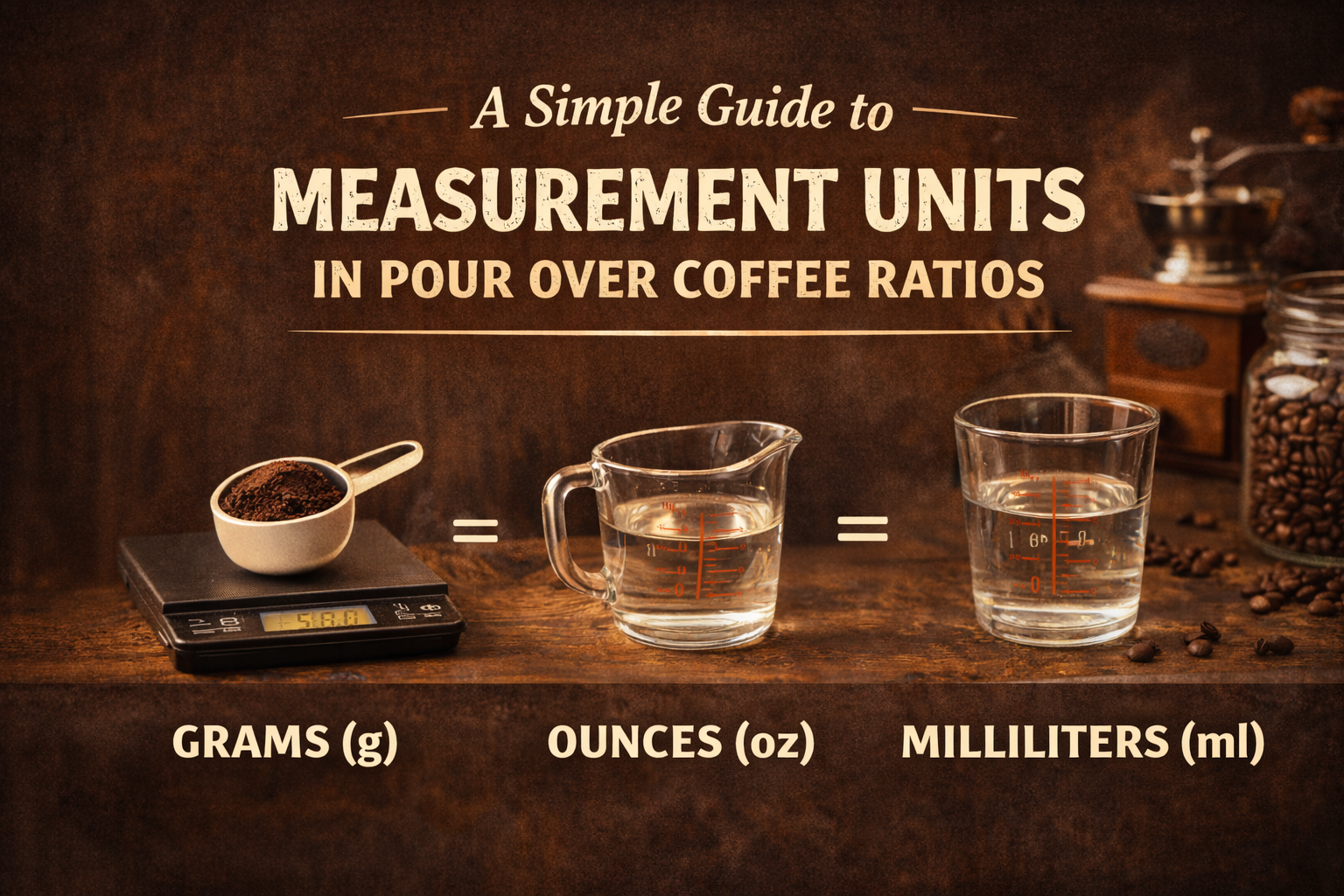
When it comes to measuring coffee, there are a variety of units you can use, and each has its pros and cons. Here, we’ll explore three common methods for determining your pour over coffee ratio: tablespoons, grams, and ounces.
For many coffee drinkers, tablespoons are the go to measurement, especially if they don’t have a coffee scale on hand. Using tablespoons makes the brewing process faster and simpler. However, it’s important to keep in mind that the amount of coffee you can fit into a tablespoon can vary depending on the grind size.
On average, 1 tablespoon of ground coffee is equivalent to around 5 grams. This means that when you’re brewing your coffee, you can use the following measurements to keep your pour over coffee ratio consistent:
While tablespoons are convenient, they may not always provide the level of precision that some coffee drinkers desire, particularly those who want to fine tune their brews.
For a more accurate and consistent measurement, grams are the gold standard. Weighing your coffee grounds using grams ensures that you are using the exact amount of coffee needed for your ideal pour over ratio.
Using grams also takes out the guesswork, ensuring that every brew is the same, regardless of factors like humidity or the grind size. Typically, coffee enthusiasts aim for the following measurements:
This method is especially helpful if you want to replicate a specific taste or strength from one brew to the next.
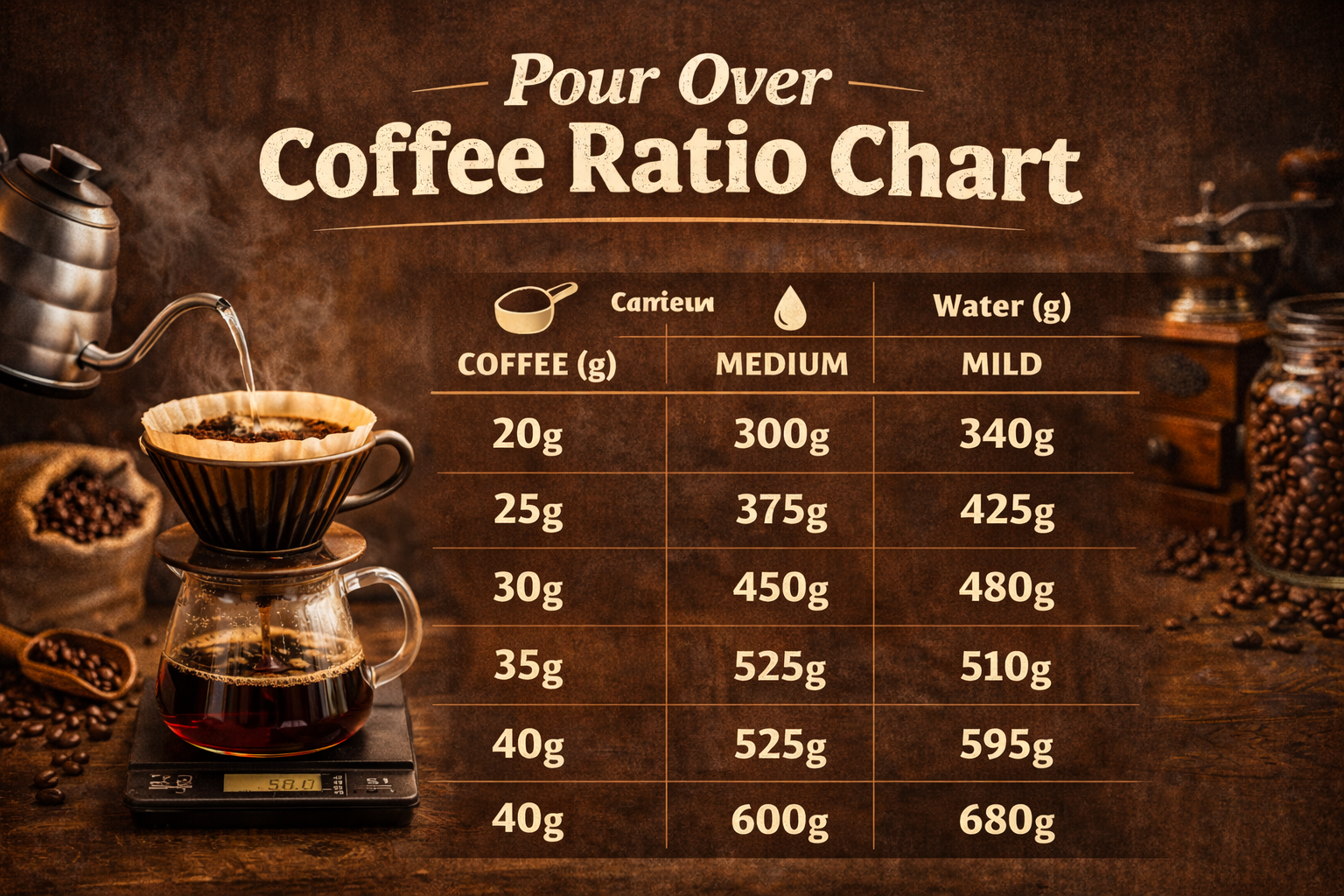
Sometimes, having a quick reference can make brewing easier, which is why many people turn to a pour over coffee ratio chart. This chart serves as a convenient guide to determine the right amount of coffee and water for your preferred brew size. Below is a chart that you can use to determine your pour over coffee ratio:
Water Amount (oz) | Coffee Amount (tbsp) | Coffee Amount (grams) |
8 oz (1 cup) | 1 – 1.5 tbsp | 12 – 14 grams |
16 oz (2 cups) | 3 – 4 tbsp | 24 – 28 grams |
24 oz (3 cups) | 4.5 – 6 tbsp | 36 – 42 grams |
32 oz (4 cups) | 6 – 8 tbsp | 48 – 56 grams |
This chart can be a great resource if you’re experimenting with different brew sizes. Simply adjust the measurements to match your desired cup size.
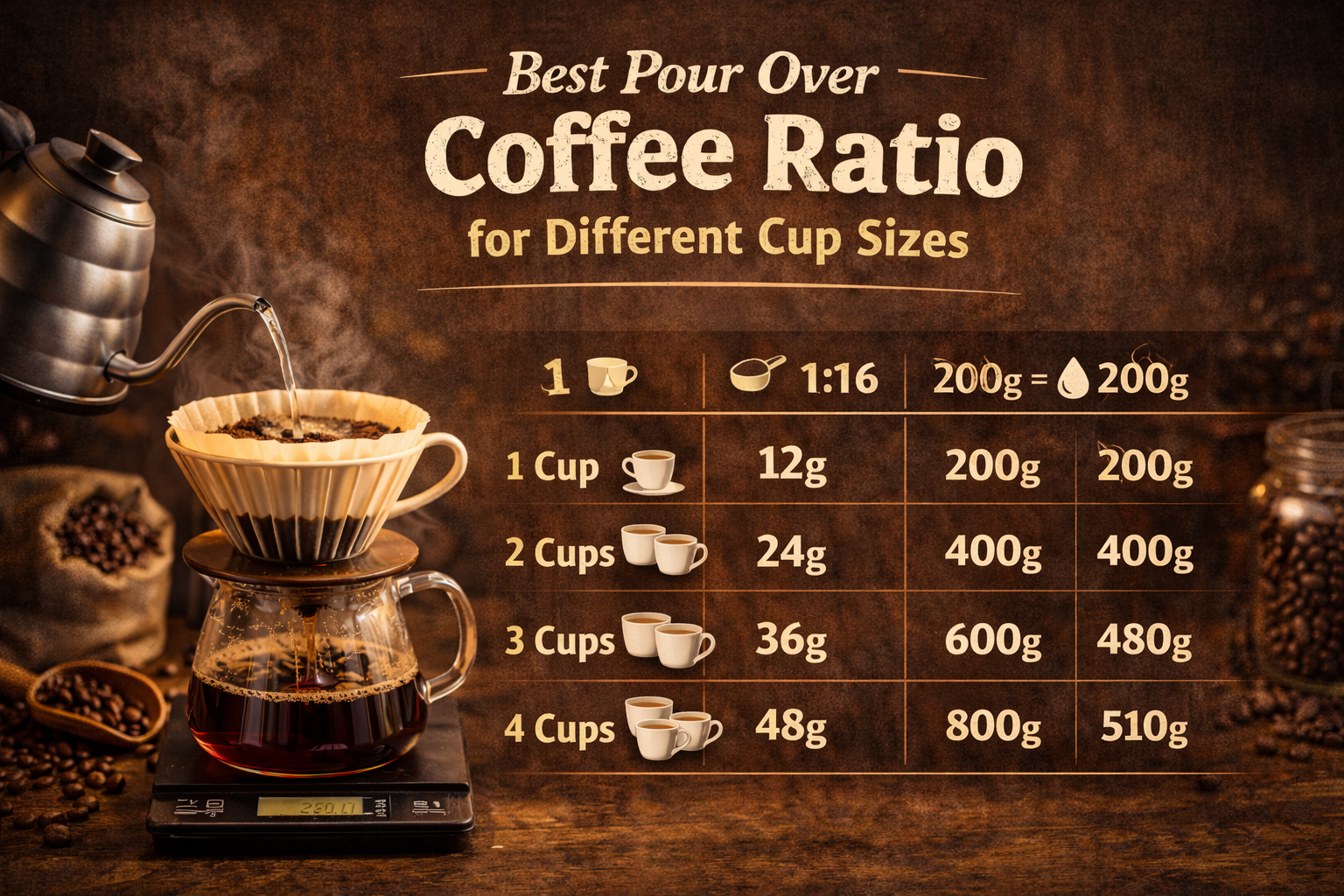
The pour over coffee ratio can vary depending on how many cups you’re brewing. While a 1:16 ratio is ideal for one cup, you may need to adjust the ratio for larger brews to achieve the right strength.
When brewing a single cup, the ideal ratio is typically around 1:16. This equates to 12 to 14 grams of coffee for every 8 oz of water. However, if you prefer a stronger cup, you can increase the coffee to water ratio to 1:14, or if you prefer something milder, you can go up to a 1:18 ratio.
If you’re brewing two cups of coffee, you’ll need to use a larger quantity of coffee grounds to maintain the desired flavor. A good guideline is to use 24 to 28 grams (about 3 to 4 tablespoons) of coffee for 16 oz of water. Adjust the ratio based on how strong or mild you want your brew.
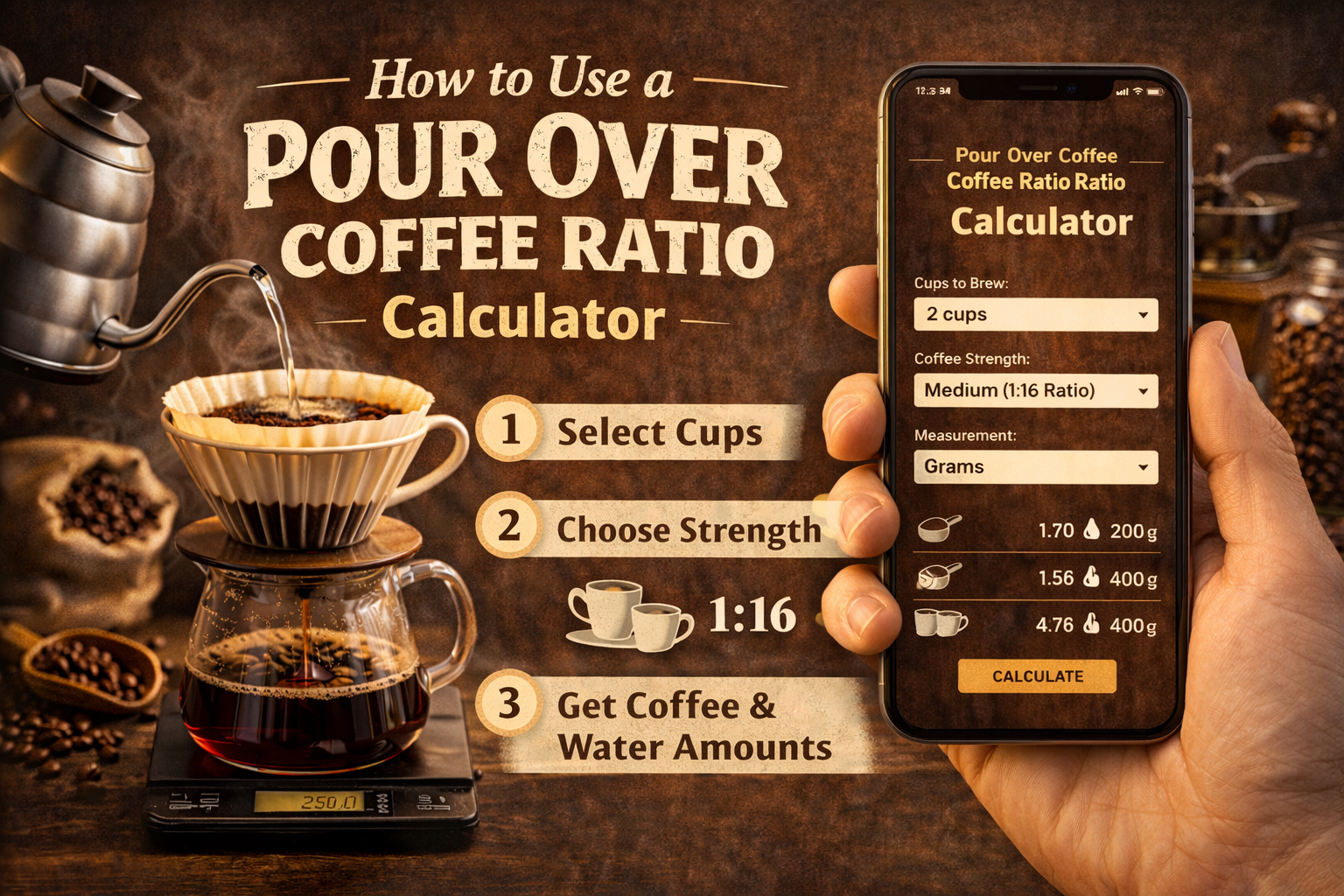
For those who want a perfect brew every time, a pour over coffee ratio calculator can be incredibly helpful. These calculators allow you to input your desired cup size, and they automatically calculate the precise amount of coffee grounds and water you need for the ideal pour over ratio.
Many coffee enthusiasts use these calculators to ensure consistency across all their brews. The advantage of using a calculator is that it takes all the guesswork out of the equation, allowing you to focus on other elements of the brewing process, such as water temperature and grind size.

Even experienced coffee drinkers can sometimes make mistakes when it comes to the pour over coffee ratio. Here are a few common errors and how you can avoid them:
Forums like Pour Over Coffee Ratio Reddit offer great insight from coffee lovers who have experimented with different ratios. By reading through these discussions, you can gain valuable tips on how to fine tune your brew to your personal taste.
Some users recommend using a 1:15 ratio for a bolder cup, while others prefer the 1:16 ratio for a smoother taste. These insights can help you find the perfect balance for your ideal brew.
The best water ratio for pour over coffee is typically 1:16 (1 part coffee to 16 parts water). Adjust this depending on your taste preference, with some opting for 1:15 for a stronger brew or 1:17 for a milder one.
For 16 oz of pour over coffee, use about 3 to 4 tablespoons of ground coffee, which is roughly 24 to 28 grams.
To make perfect pour over coffee, use a 1:16 coffee to water ratio, grind your coffee to a medium consistency, heat water to 195 205°F, and pour steadily in a circular motion, allowing the coffee to bloom before continuing to pour.
The golden ratio for pour over coffee is often 1:16 (1 gram of coffee for every 16 grams of water), which provides a balanced and flavorful brew.
The 80/20 rule in coffee suggests that 80% of the flavor comes from the coffee beans, while 20% comes from the brewing method. This emphasizes the importance of quality coffee beans and the right brewing technique.
For 1 cup (8 oz) of pour over coffee, use 12 to 14 grams of coffee, or about 1 to 1.5 tablespoons.
For a 300ml pour over, use about 18 to 19 grams of coffee, or approximately 3 tablespoons, based on the standard 1:16 ratio.
Yes, 18 grams of coffee is typically used for a double shot of espresso, which is approximately 36 ml of brewed coffee.
In conclusion, the pour over coffee ratio is an essential factor in brewing the perfect cup of coffee. Whether you measure your coffee grounds in tablespoons, grams, or use a pour over coffee ratio calculator, getting the right balance between coffee and water will ensure a delicious brew.
By understanding how different ratios affect the flavor, strength, and overall quality of your coffee, you can customize your brewing process to match your exact preferences. With the right equipment, a bit of experimentation, and a good reference like the pour over coffee ratio chart, you’ll soon be brewing the perfect pour over cup every time.
So, whether you’re brewing for one or preparing a larger batch, keep these tips in mind and enjoy a consistently amazing cup of coffee every morning.





Contact Us Jump To Does Black Coffee Have Calories Real Truth About Fasting, Weight Loss & Health You switch to black coffee, thinking it is the safest drink for weight loss. No sugar, no milk, almost no calories. It feels like a smart move. But…

Contact Us Jump To How to Roast Coffee Beans at Home (Beginner to Pro Guide) A lot of people try roasting coffee at home with excitement, but the results often disappoint them. The beans either taste too bitter, too sour, or completely flat. The confusion…

Contact Us Jump To Baratza Encore Coffee Grinder A Beginner Friendly Guide to Grind Quality, Settings, Upgrades, and Whether It Is Still Worth Buying You buy good coffee beans, follow a recipe, and still get a cup that tastes flat, bitter, or oddly sour. For…

Explore the world of coffee with honest reviews and practical advice. Find your perfect cup, one bean and machine at a time.