

Bitter, weak, or just “off” coffee? Before you blame your beans, look inside your machine. Mineral buildup, stale coffee oils, and trapped residue quietly ruin flavour — and most of it comes from skipping one simple habit: cleaning.
The good news: the fastest fix is the descaling cycle. Fill your Ninja’s reservoir with equal parts white vinegar and water (or a coffee-machine descaling solution), press the Clean button, and let the machine run its full automatic cycle. Empty the carafe, then run two full cycles with plain water to rinse. Your coffee should taste noticeably better right away.
If your Ninja has a Clean button with a little light that won’t stop glowing, that’s the machine telling you it’s due for exactly this.
Cleaning a Ninja coffee maker comes in two layers, and mixing them up is why most guides get confusing:
Both matter. The first keeps oils and old grounds out of your cup; the second keeps minerals from slowing the machine down. For general coffee maker care, see our guide to cleaning a coffee maker.
Start here, because it’s the part most people skip:
Once a week, give the water reservoir the same treatment and scrub its corners with a soft brush — it’s warm, dark, and damp, so residue builds there fast. And don’t leave water sitting in it for days between brews; fresh water in, better coffee out.
Do this every few days if you brew daily. Stale coffee oils go rancid fast, and they go straight into your next cup.
Take a soft, damp cloth and wipe the outside of the machine and the warming plate. Coffee drips and spills burn onto the plate over time, leaving stains and a faint burnt smell. Avoid harsh chemicals or scouring powders — they can dull the finish and aren’t necessary for this job.
This is the main event. Here’s the standard procedure that works across the Ninja Specialty, Classic, Dual Brew, and most current models:
Never skip the rinse — it’s what stands between you and vinegar-tasting coffee.
Smell the carafe before you brew coffee. If you catch any vinegar, run one more water cycle. Most people find two rinses do the trick.
| Task | How often |
|---|---|
| Rinse carafe and brew basket with soap | Every few days (daily brewers) |
| Wash the water reservoir | Weekly |
| Descale via the Clean cycle | Every 2–3 months, or when the Clean light comes on |
| Deep clean pod needle/holder (Dual Brew) | Monthly |
The Clean light is the machine’s own reminder. When it stays lit, mineral scale has built up enough to affect performance — don’t put it off. And if you have hard water, move descaling closer to every two months; scale builds up much faster with hard water.
The Dual Brew brews both grounds and pods, so it has one extra cleaning zone: the pod mechanism.
This matters: the pod side clogs first on Dual Brew models because coffee fines collect around the needle. A monthly rinse of the holder keeps it flowing.
Fill the reservoir halfway with white vinegar and top it up with water (or use a descaling solution per its label). Set the empty carafe in place, press the Clean button, and let the cycle finish — usually about an hour. Empty the carafe, then run two full cycles with plain water to rinse.
For most reservoirs: half vinegar, half water. On a standard 12-cup carafe machine, that’s roughly 6 cups of vinegar and 6 cups of water.
Yes — use a commercial coffee-machine descaling solution mixed exactly as the label directs. It descales the same way without the vinegar smell. What doesn’t work is plain water alone for descaling; it’s fine for a quick flush between descaling sessions, but it won’t dissolve mineral buildup.
About an hour on most models. It varies slightly, so don’t panic if yours runs a few minutes longer.
It usually means the cycle didn’t fully complete, or the machine needs a second cycle. Try running the clean cycle once more, followed by the rinse cycles. If the light persists after that, check your manual — on a few models the indicator resets in a specific way.
Yes, when you use vinegar or a coffee-machine descaler as described. Avoid bleach, abrasive cleaners, and any chemical not meant for coffee equipment.
Cleaning your Ninja coffee maker isn’t complicated — it’s just easy to postpone. Wash the removable parts a couple of times a week, wipe down the outside, and run the Clean cycle every 2–3 months (or whenever the light tells you to). Do that, and you’ll get better-tasting coffee, faster brewing, and a machine that lasts years instead of months.



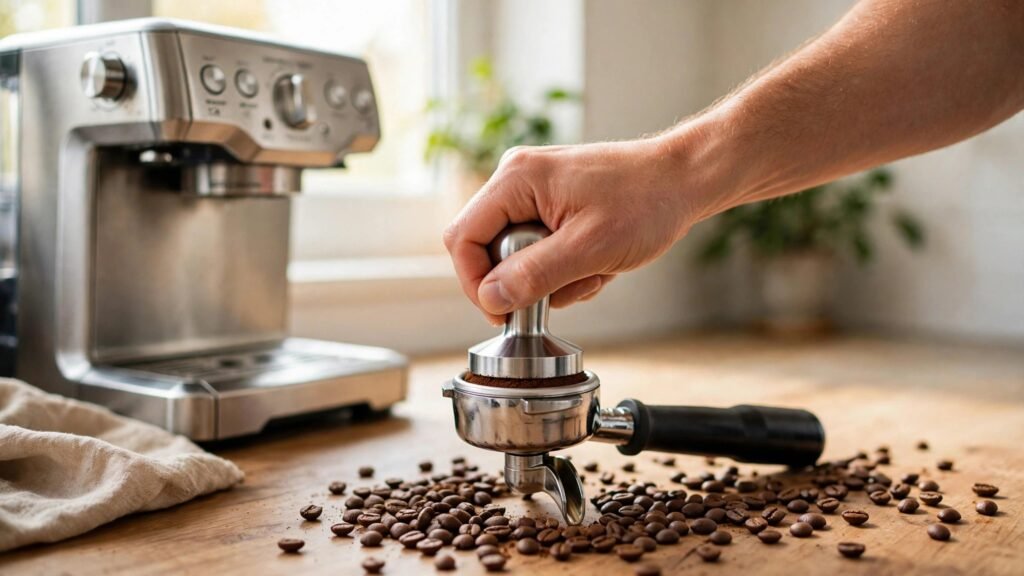
Jump To How to Tamp Espresso: Level, Even and Repeatable — the Pressure Number Matters Less Than You Think How to tamp espresso is one of the first skills a home barista learns, and one of the most overcomplicated. Tamping means pressing the ground coffee…

Jump To What Is a Mocha Coffee? The Drink, the Name, and How It Differs From a Latte What is a mocha coffee? It is an espresso drink made with steamed milk and chocolate — a latte with chocolate in it, in plain terms. A…
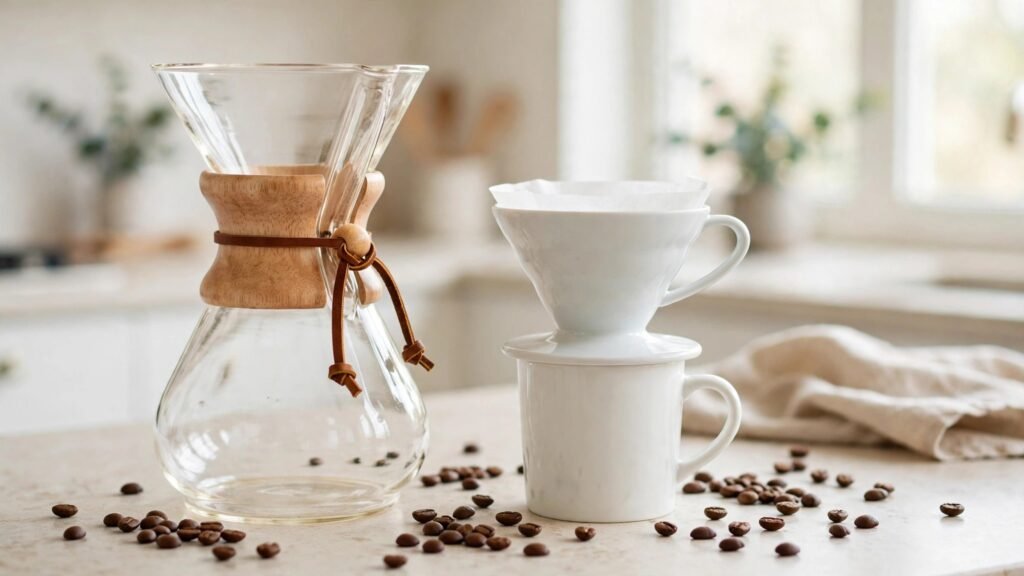
Jump To Chemex vs V60: Which Pour-Over for Your Taste, Your Patience and Your Household Size? A Chemex vs V60 choice is really about the filter. Both brewers are pour overs. Both use hot water, ground beans, and gravity. The difference is what sits between…

Explore the world of coffee with honest reviews and practical advice. Find your perfect cup, one bean and machine at a time.