
Use 1 scoop (2 tablespoons, about 10 grams) of ground coffee per 6-ounce cup of water — that’s the standard ratio for drip coffee. Like it stronger? Go up to 1½ scoops. This simple rule works for most brewing methods, and the chart below has exact amounts for 1 to 12 cups.
Key Takeaways
A standard coffee scoop holds 2 tablespoons of ground coffee, which weighs about 10 grams. That one definition clears up most of the confusion: when a recipe says “1 scoop per cup,” it means 2 tablespoons (10 g) per 6 ounces of water.
One heads-up: some coffee makers come with a smaller 1-tablespoon scoop in the box. Check yours — if your coffee keeps tasting weak, a small scoop might be the culprit.
| Cups (6 oz each) | Water | Scoops | Tablespoons | Grams (approx.) |
|---|---|---|---|---|
| 1 | 6 oz | 1 | 2 tbsp | 10 g |
| 2 | 12 oz | 2 | 4 tbsp | 20 g |
| 4 | 24 oz | 4 | 8 tbsp | 40 g |
| 6 | 36 oz | 5–6 | 10–12 tbsp | 50–60 g |
| 8 | 48 oz | 7–8 | 14–16 tbsp | 70–80 g |
| 10 | 60 oz | 9–10 | 18–20 tbsp | 90–100 g |
| 12 | 72 oz | 11–12 | 22–24 tbsp | 110–120 g |
Brewing a full pot? Most drip machines measure a “cup” as 5 oz, not 8. So a “12-cup” coffee maker holds about 60 oz of water — use 10 scoops for standard strength, 11–12 if you like it bold.
Use 1 scoop per 6 oz of water. If your machine brews weak, go to 1½ scoops — but don’t just keep piling coffee in past that point. Over-dosing is what turns drip coffee bitter.
Same baseline: 1 scoop (2 tbsp) per 6 oz. Pour over rewards precision, so this is the method where a scale pays off fastest — aim for roughly a 1:16 coffee-to-water ratio by weight.
Use 1 to 1½ scoops per 6 oz of water. Because the grounds steep directly in the water (immersion brewing), a slightly higher ratio gives you that rich, full-bodied cup French press is known for — without tipping into bitterness.
Scoops measure volume, but coffee is really best measured by weight: 10 grams equals one scoop. Whole beans vary in size and density, so a volumetric “scoop” of beans is unreliable — if you grind fresh (and you should), weigh out 10 g per cup instead of guessing. A basic kitchen scale takes all the math out of it.

Use 10 scoops for standard strength. A “12-cup” maker holds about 60 oz (its “cups” are 5 oz, not 8), and at 1 scoop per 6 oz that works out to 10 scoops. Go to 11–12 scoops for a bolder pot.
A standard coffee scoop is 2 tablespoons (about 10 grams of ground coffee). Some machines come with a smaller 1-tablespoon scoop, so check yours before blaming the beans for weak coffee.
Three usual suspects: a grind that’s too coarse, stale beans (ground coffee goes flat within days of opening), or water that isn’t hot enough (aim for about 200°F / 93°C). Fix those before adding more coffee — and when you do adjust, change by half a scoop at a time.
If you brew daily, yes. Scoops are fine for convenience, but 10 grams per 6 oz of water on a scale gives you the same cup every single time — no packing, leveling, or scoop-size guessing.
Simple as that: 1 scoop (2 tablespoons / ~10 g) per 6 oz cup, adjusted to taste. Measure once with the chart above, tweak by half-scoops until it tastes right, and you’ll never brew a bad pot by accident again.




Here’s a question most of us never actually answer: how much caffeine did you really have today? That morning latte, the mid-afternoon cold brew, the cola with lunch — they add up fast, and almost nobody does the math. So we built this caffeine calculator…
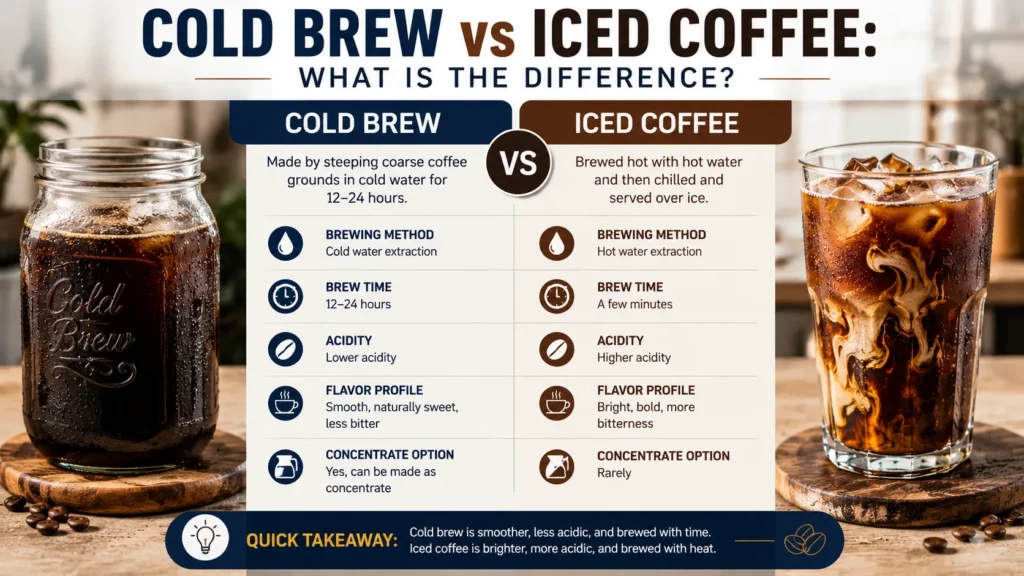
Cold brew vs iced coffee vs iced espresso — the summer menu looks simple until you have to choose. They all show up in a glass of ice. But they don’t taste the same, they aren’t made the same way, and they don’t take the…

French press vs pour over vs espresso — three brewers, three very different cups of coffee. None of them is objectively “the best.” They just suit different mornings, different budgets, and different tastes. This guide compares all three honestly: how each one works, what the…

Explore the world of coffee with honest reviews and practical advice. Find your perfect cup, one bean and machine at a time.