


Want to learn how to make cold brew at home? Here is the short version: combine 1 part coarsely ground coffee with 4 parts cold, filtered water, stir, cover, and steep for 12 to 18 hours. Strain it, pour over ice, and you have smooth, naturally sweet cold brew ready to drink.
Cold brew is never made with hot water. Instead of a fast, hot extraction, the grounds soak slowly in cold or room-temperature water, which pulls out fewer bitter acids and leaves a mellow, chocolatey flavour behind. It also keeps well in the fridge for days, so one batch covers your whole week. The full method below costs almost nothing beyond the coffee itself.
Cold brew is simply coffee steeped in cold water for a long time — usually 12 to 24 hours. The slow, gentle extraction gives it a rounded flavour that many people find easier on the stomach than regular iced coffee.
Do not confuse it with iced coffee. Iced coffee is hot-brewed coffee poured over ice, which keeps its brighter, sharper acidity. Cold brew and iced coffee start from opposite ends of the thermometer, and you can taste the difference.
That is genuinely it. No special machine, no expensive kit.
The ratio is where most people go wrong, and it is also the easiest thing to fix. There are two main approaches, and you should pick one before you start:
| Style | Coffee : Water | Steep Time | How to Serve |
|---|---|---|---|
| Ready-to-drink | 1 : 4 | 12–18 hours | Pour over ice and drink as-is. |
| Concentrate | 1 : 2 | 16–24 hours | Dilute roughly 1:1 with water or milk before drinking. |
The ready-to-drink ratio (for example, 1 cup of grounds to 4 cups of water) gives you a balanced brew you can serve straight over ice. The concentrate ratio (1 cup of grounds to 2 cups of water) makes a stronger base that stretches further — handy if you like milky drinks or want one batch to last. With concentrate, dilute to taste: start with equal parts concentrate and water or milk, then adjust.
These are widely used ranges, not lab-grade precision. Kitchen scales help if you want consistency (a 1:4 ratio by weight works the same as by volume), but cups and a spoon work fine to start.
A French press is one of the simplest vessels for cold brew because the built-in mesh plunger does the first strain for you.
Add your grounds and cold water at your chosen ratio and stir. Put the lid on but leave the plunger up — do not press it yet. Steep 12 to 18 hours. When the time is up, press the plunger down slowly to separate the grounds, then pour the brew through a paper filter for a cleaner cup (the metal mesh alone lets fine sediment through).
Use a coarse grind — roughly the texture of raw sugar or breadcrumbs. Fine grounds over-extract in a long steep and turn the brew cloudy and bitter, and they clog filters badly. If your grinder has a “French press” setting, that is the one to use. Pre-ground “coarse” coffee from the shop works too, though grinding whole beans just before brewing gives noticeably better aroma.
Steep time is your main flavour dial:
Start at 14 or 16 hours, taste the next batch at 18, and find what you like. Small changes in time make a real difference.
Medium and dark roasts are the classic pick: they bring chocolate and caramel notes and low perceived bitterness, which is what most people want from cold brew. Light roasts work too if you enjoy fruity, floral notes — they just taste brighter and a little more acidic. Whole beans ground fresh beat pre-ground on flavour, but pre-ground is perfectly fine while you are learning.
Make ready-to-drink if you mostly drink your cold brew black or with a splash of milk, and you want grab-and-go convenience. Make concentrate if you prefer lattes and creamy iced drinks, or want one batch to yield more servings. Concentrate is also what most coffee shops use, which is why café cold brew can taste so strong.
Stored in a sealed container in the fridge, cold brew stays fresh for about 5 to 7 days. Concentrate keeps on the longer end of that range; diluted, ready-to-drink brew is best within about 5 days. If it smells stale or tastes flat, bin it — unlike hot coffee, old cold brew does not reheat well into anything worth drinking.
It depends on how you drink it. Cold brew concentrate has more caffeine per ounce than regular coffee because of the higher coffee-to-water ratio — but you dilute it before drinking. A diluted serving of cold brew typically lands in roughly the same range as a regular cup of hot coffee. If you drink the concentrate straight, yes, it will hit harder.
A 1:4 coffee-to-water ratio (for example, 1 cup of coarse grounds to 4 cups of cold water) is the standard starting point for ready-to-drink cold brew. For concentrate, use 1:2.
12 to 18 hours works for most batches. Go up to 24 hours for concentrate; avoid going past 24 hours, which can introduce bitter, woody flavours.
Yes — it is one of the easiest methods. Add grounds and cold water, leave the plunger up while it steeps, then press down slowly and do a final strain through a paper filter.
About 5 to 7 days in a sealed container. Concentrate keeps slightly longer than diluted brew.
Generally yes. Cold water extracts fewer bitter acids than hot water, so cold brew tastes mellower and many people find it gentler on the stomach. Iced coffee keeps the brighter acidity of hot brewing.
You can, though it is designed to be served cold. Warm it gently rather than boiling it — boiling dulls the smooth flavour that makes cold brew worth making.
Learning how to make cold brew is one of the highest-return skills in home coffee: a jar, some coarse grounds, and a bit of patience gets you a week of smooth, low-acid coffee for the price of the beans. Start with the 1:4 ratio and a 14-hour steep, adjust from there, and you will have it dialled in within two or three batches.



Here’s a question most of us never actually answer: how much caffeine did you really have today? That morning latte, the mid-afternoon cold brew, the cola with lunch — they add up fast, and almost nobody does the math. So we built this caffeine calculator…
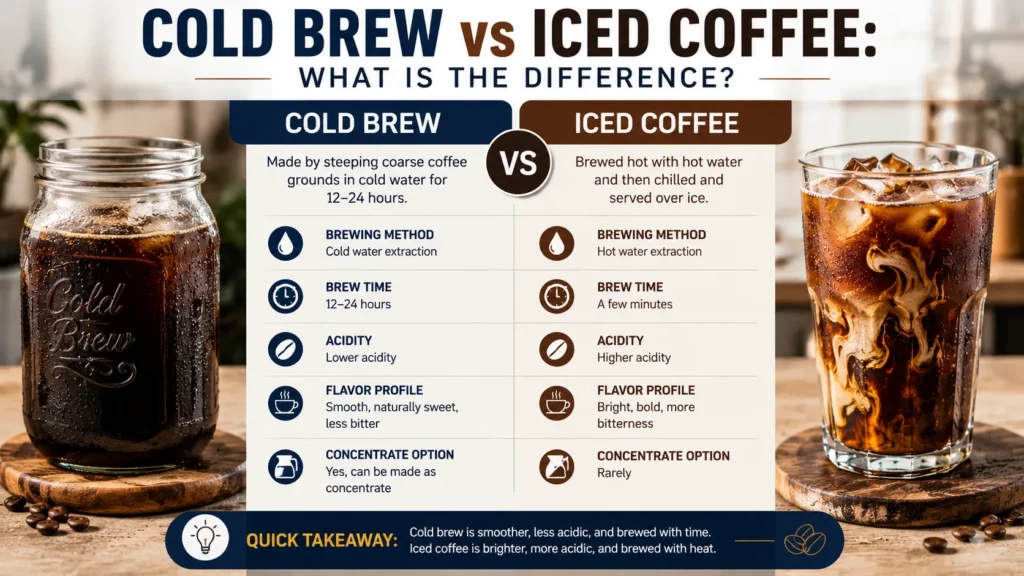
Cold brew vs iced coffee vs iced espresso — the summer menu looks simple until you have to choose. They all show up in a glass of ice. But they don’t taste the same, they aren’t made the same way, and they don’t take the…

French press vs pour over vs espresso — three brewers, three very different cups of coffee. None of them is objectively “the best.” They just suit different mornings, different budgets, and different tastes. This guide compares all three honestly: how each one works, what the…

Explore the world of coffee with honest reviews and practical advice. Find your perfect cup, one bean and machine at a time.