



If you have ever stood in front of a coffee menu and felt confused about what to order, you are not alone. Most people search for types of coffee drinks to get clarity, but instead, they find lists that sound fancy and confusing, without actually helping them decide.
The real issue is simple. Coffee drinks are not complicated, but they are explained in a complicated way.
After testing different drinks at home and in cafés, one thing became clear. The difference between coffee drinks is not about names. It comes down to small details like how the coffee is extracted, how much milk is added, and how the drink is prepared. These small differences completely change taste, texture, and even how strong the coffee feels.
In this guide, you will learn about different types of coffee drinks explained in a real and practical way, so you can actually choose the right drink and enjoy it.
When someone says they like coffee, it can mean many different things. The reason is that every coffee drink is built from a few core elements, and changing any of them creates a new experience.
The first factor is the base. Some drinks use espresso, which is strong and concentrated, while others use brewed coffee, which is lighter and smoother. From my experience, espresso based drinks feel more intense, while brewed coffee is easier to sip for a longer time.
The second factor is milk. Adding milk changes everything. A drink with more milk becomes smoother and slightly sweet, while a drink without milk stays bold and sharp. Even the texture of milk, whether it is foamy or silky, changes how the drink feels.
The third factor is extraction. This is something I learned through trial and error. If coffee is extracted too quickly, it tastes sour. If it is extracted too long, it becomes bitter. Finding the right balance is what makes a good cup.
The fourth factor is temperature. Hot coffee has a stronger aroma and feels richer, while cold coffee tastes smoother and less acidic. This is why cold brew and iced coffee feel completely different, even though both are served cold.

All coffee drinks can be divided into two main groups:
Once you understand this division, everything becomes much easier to follow.
Espresso is the base of most modern coffee drinks. It is made by pushing hot water through finely ground coffee under pressure. The result is a small but powerful shot that carries deep flavor and aroma.
From testing different setups, I noticed that timing is extremely important. A proper espresso shot takes around 25 to 30 seconds. If it runs too fast, the taste becomes sour. If it runs too slowly, bitterness increases. Once you learn this, making good coffee becomes much easier.
Ristretto and lungo are two variations that depend on extraction time. A ristretto uses less water and a shorter extraction, which creates a sweeter and more concentrated taste. A lungo uses more water and longer extraction, which produces a more diluted but slightly bitter drink. In my experience, ristretto is much easier to enjoy, especially if you do not like bitterness.
Americano and long black may look similar, but they are prepared differently. In an Americano, hot water is added first and espresso is poured on top, which makes the drink smoother. In a long black, espresso is poured over water, which preserves the crema and gives a stronger flavor. This small change creates a noticeable difference.
Milk based drinks like macchiato, cortado, and flat white show how milk ratio changes everything. A macchiato has very little milk, so it remains strong. A cortado balances espresso and milk equally, giving a smooth and balanced taste. A flat white uses more milk but keeps a silky texture, making it one of the most enjoyable drinks for daily use.
Cappuccino and latte are the most popular options. A cappuccino has equal parts espresso, milk, and foam, which creates a strong yet airy texture. A latte contains more milk and less foam, making it creamier and easier to drink. In real life, most people who think they like strong coffee actually prefer latte because it is smoother.
Mocha is a combination of espresso, chocolate, and milk. It feels more like a dessert than a regular coffee. From my experience, it is the best starting point for beginners who do not like bitterness.
Breve is a richer version of latte that uses half and half instead of milk. This makes it thicker and more indulgent. However, it can feel too heavy if consumed regularly.
Iced variations like iced latte and affogato show how temperature changes the experience. Iced latte feels refreshing and smooth, while affogato, which combines espresso with ice cream, is more like a dessert than a drink.
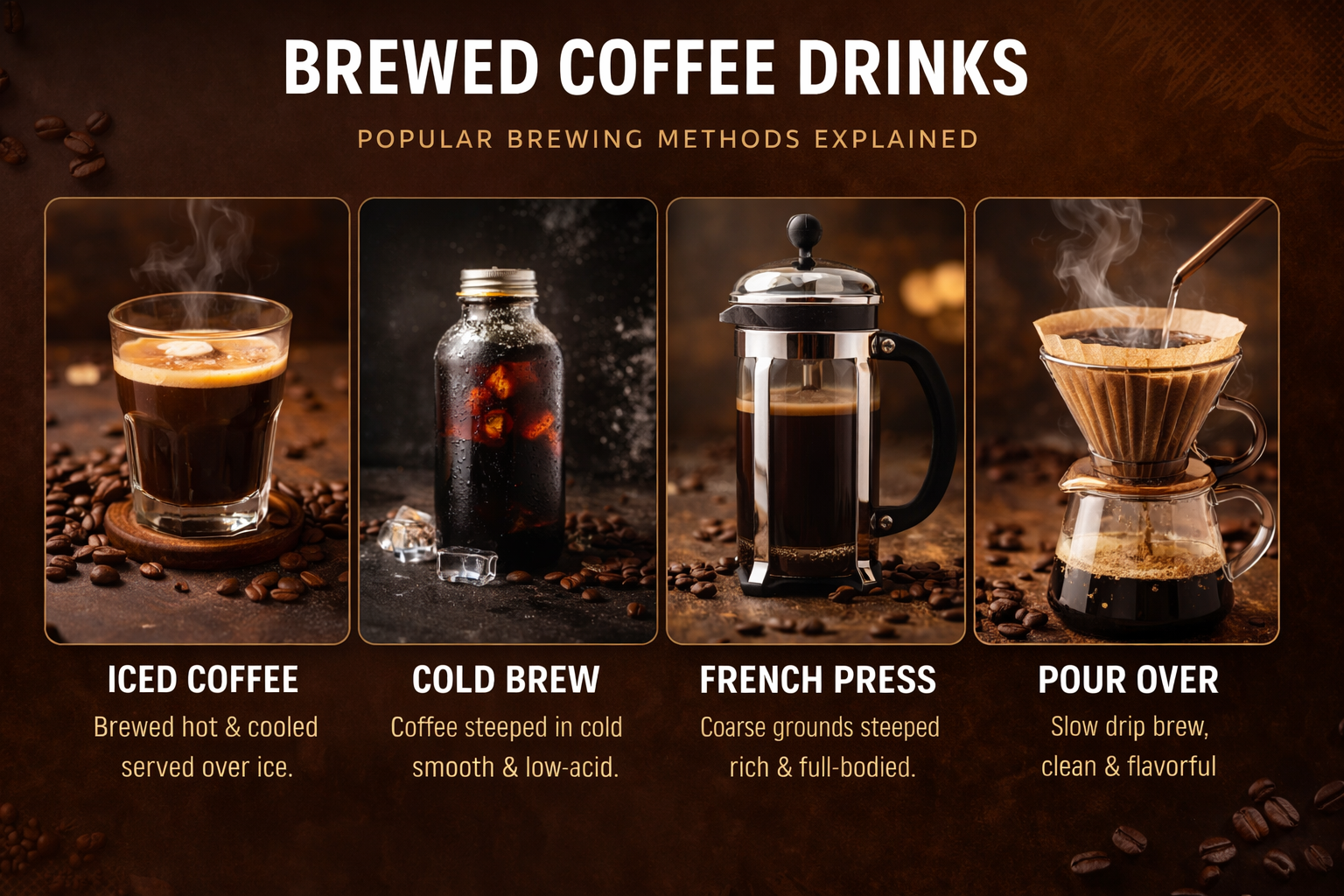
Brewed coffee drinks are made without pressure and rely on methods like dripping or steeping.
Drip coffee is the most common method and is widely used in homes. It is simple, consistent, and easy to prepare. The taste is balanced and not too strong, which makes it ideal for daily use.
Pour-over coffee gives more control over the brewing process. You manually pour water over coffee grounds, which allows better extraction. From my experience, this method produces a cleaner and more flavorful cup, but it requires patience and attention.
The French press creates a rich and full-bodied coffee because the grounds stay in contact with water longer. However, I learned that using the wrong grind size can make the coffee muddy or overly bitter, which is a common mistake.
Cold brew and iced coffee are often confused. Cold brew is made by steeping coffee in cold water for many hours, which results in a smooth and low-acid drink. Iced coffee is brewed hot and then cooled, which makes it sharper and more acidic. Personally, cold brew feels smoother but stronger in effect.
AeroPress is a versatile method that combines pressure and immersion. It is quick, easy, and produces a clean cup. With practice, it can even produce espresso-like coffee.
Moka pot is a traditional stovetop method that produces strong coffee similar to espresso. It is a great alternative for people who do not have an espresso machine, but it requires careful heat control.
|
Drink |
Base |
Milk |
Taste |
Strength |
|
Espresso |
Espresso |
No |
Bold |
High |
|
Latte |
Espresso |
Yes |
Smooth |
Medium |
|
Cappuccino |
Espresso |
Yes |
Creamy |
Medium |
|
Mocha |
Espresso |
Yes |
Sweet |
Medium |
|
Cold Brew |
Brewed |
No |
Smooth |
High |
|
Americano |
Espresso |
No |
Light |
Medium |
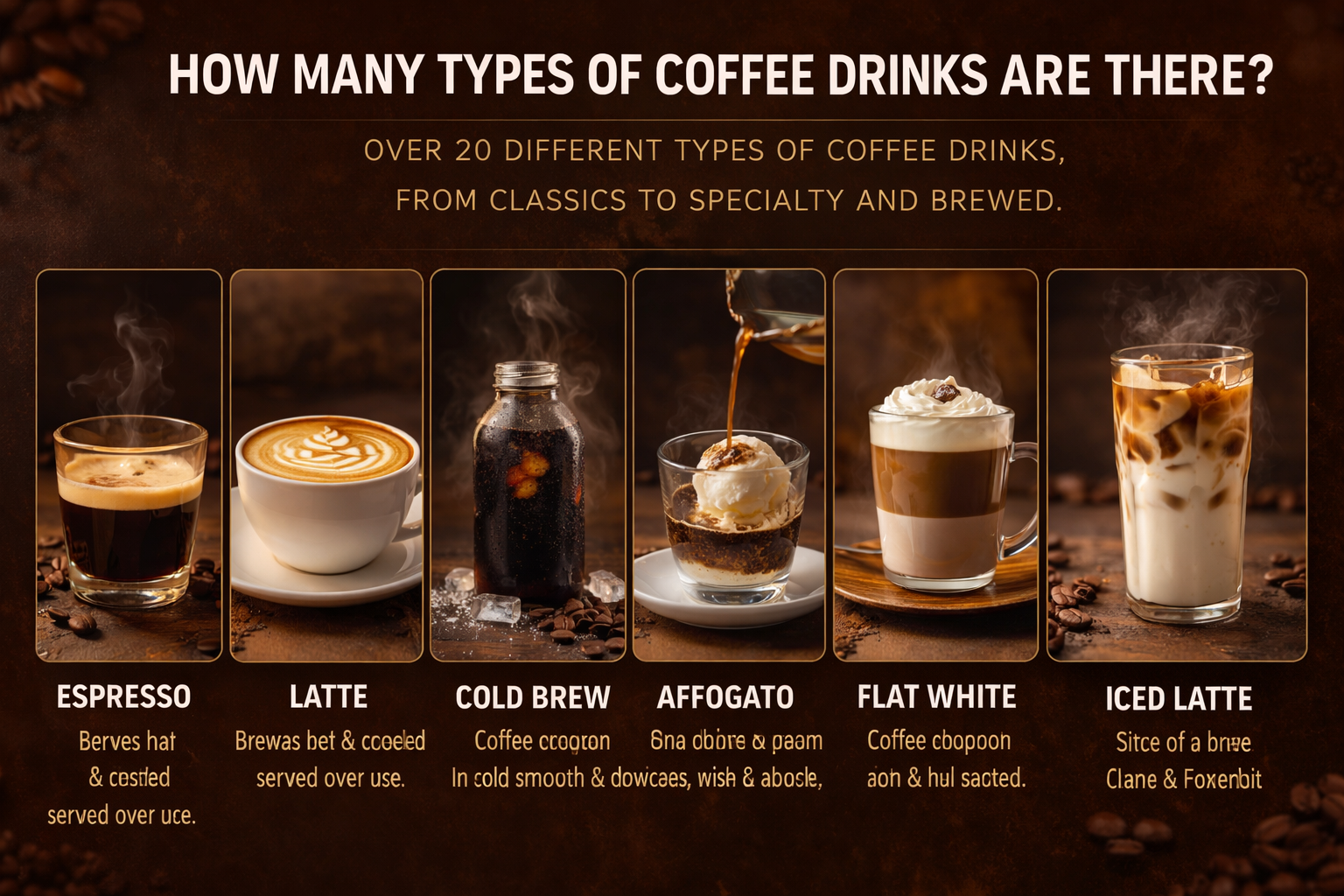
There is no exact number, but realistically, there are around 15 to 20 main types of coffee drinks. When you include variations, flavors, and regional styles, the number easily goes beyond 50.
Most drinks are simply variations of espresso combined with milk or water, or brewed coffee prepared using different methods.
Choosing the right coffee drink depends on your taste and experience. If you are a beginner, it is better to start with something smooth like a latte or mocha. These drinks are easier to enjoy and not too strong.
If you prefer bold flavors, an espresso or a macchiato will suit you better. If you want something balanced, a flat white or cortado is a great option.
From my experience, your equipment also matters. If you do not have an espresso machine, methods like French press or AeroPress work better. If you want something quick and easy, drip coffee is the best choice.
Many people struggle with coffee because of simple mistakes. One of the biggest issues is using the wrong grind size, which can completely ruin the taste. Another mistake is over-extracting espresso, which leads to bitterness.
Milk is also often mishandled. Overheated milk destroys its natural sweetness and creates a flat taste. Using stale beans is another common problem that reduces flavor quality.
Adding too much sugar is also a mistake because it hides the natural taste of coffee. Once I reduced sugar, I started noticing real flavor differences between drinks.
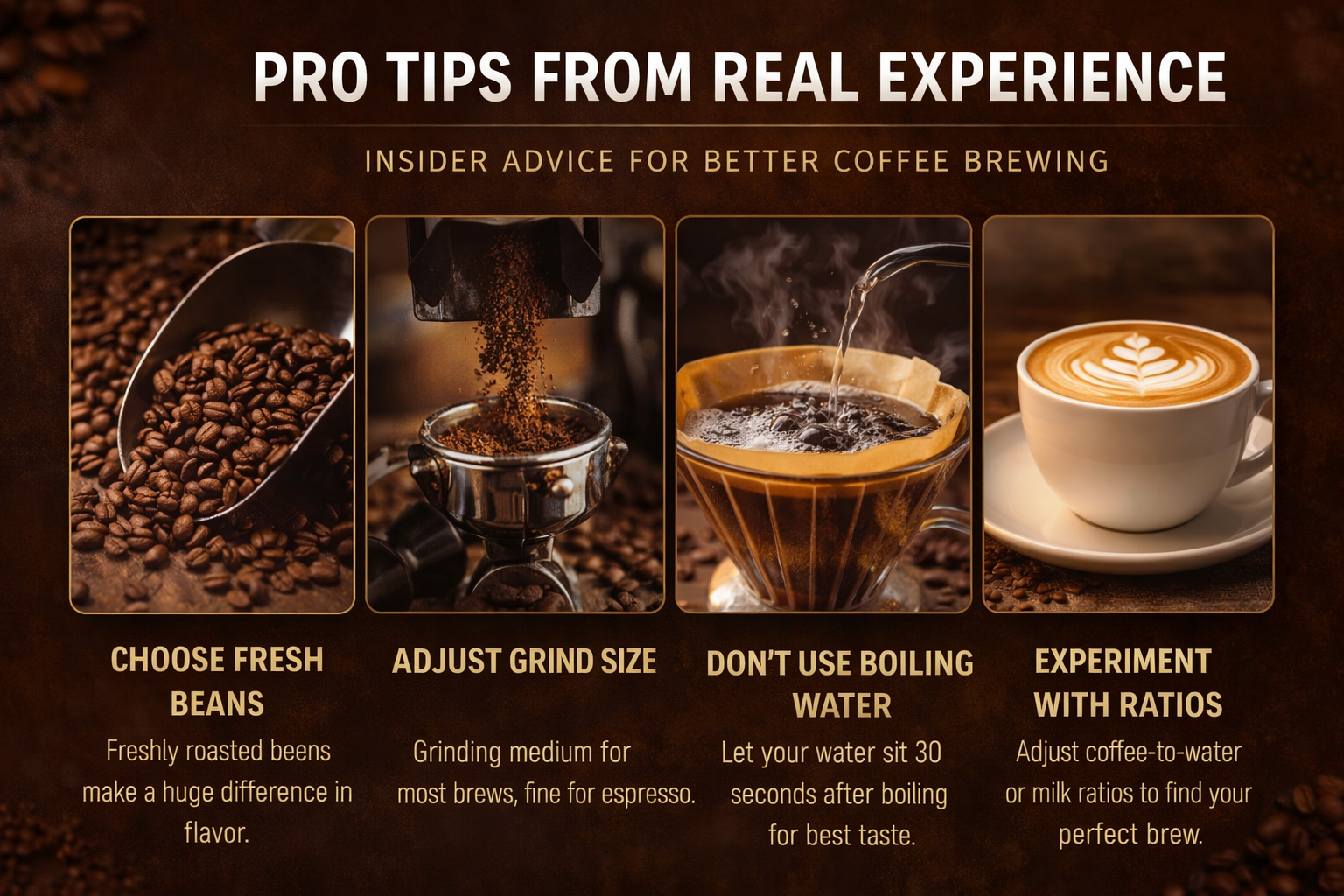
From my experience, fresh beans make the biggest difference in coffee quality. Even a perfect brewing method cannot fix bad beans.
Preheating your cup helps maintain the temperature and improve the taste. Using filtered water also enhances flavor clarity.
Another important tip is to keep things simple in the beginning. Instead of trying many drinks at once, focus on mastering one method first.
Different people need different approaches. Beginners should start with a latte because it is smooth and easy to enjoy. Busy individuals benefit from drip coffee because it is quick and consistent.
People who enjoy experimenting should try pour over or AeroPress because they offer more control. Those who prefer strong coffee will enjoy espresso or a Moka pot. For hot weather, cold brew is the best choice because it is refreshing and smooth.
If you have gastritis, low-acid coffee is the safest option. From real experience, cold brew works best because it is much smoother and less acidic than regular coffee. Dark roast coffee can also be easier on the stomach. However, if your symptoms are severe, it is better to limit coffee or consult a doctor.
Common coffee drinks are the ones you find in almost every café. These include espresso, latte, cappuccino, Americano, mocha, and cold brew. They are simple combinations of coffee with milk, water, or flavor, and they form the base of most modern coffee menus.
There is no single “best” coffee type because it depends on your taste. If you like smooth and creamy drinks, a latte is a great choice. If you prefer strong and bold flavors, an espresso or macchiato is better. From experience, beginners usually enjoy a latte or a mocha the most because they are easy to drink.
Fancy coffee drinks are more premium or visually appealing options. These include drinks like caramel latte, hazelnut cappuccino, affogato, flat white, and flavored iced lattes. They often focus on presentation, flavor combinations, and a more café-style experience.
Luxury coffee refers to high-quality beans and a premium drinking experience. It often includes specialty or rare coffee types like single-origin beans, Jamaican Blue Mountain, or Kopi Luwak. The focus is on rich flavor, aroma, and overall quality rather than just caffeine.
Classic coffee drinks are the traditional options that have been popular for many years. These include espresso, cappuccino, latte, Americano, and black coffee. They are simple, timeless, and form the foundation of most coffee menus.
Now you truly nearly understand types of coffee drinks. The biggest lesson from real experience is that coffee is not complicated. It only feels confusing when it is explained poorly.
Start with one drink, learn it properly, and then explore others. That is how you build real coffee knowledge and actually enjoy every cup.



Contact Us Jump To Does Black Coffee Have Calories Real Truth About Fasting, Weight Loss & Health You switch to black coffee, thinking it is the safest drink for weight loss. No sugar, no milk, almost no calories. It feels like a smart move.But after…

Contact Us Jump To How to Roast Coffee Beans at Home (Beginner to Pro Guide) A lot of people try roasting coffee at home with excitement, but the results often disappoint them. The beans either taste too bitter, too sour, or completely flat. The confusion…
Contact Us Jump To Baratza Encore Coffee Grinder A Beginner Friendly Guide to Grind Quality, Settings, Upgrades, and Whether It Is Still Worth Buying You buy good coffee beans, follow a recipe, and still get a cup that tastes flat, bitter, or oddly sour. For…

Explore the world of coffee with honest reviews and practical advice. Find your perfect cup, one bean and machine at a time.