


A lot of people spend good money on fresh beans, decent grinders, and better coffee makers, then ruin the final cup with the wrong coffee filter.
That sounds harsh, but it is true.
I have tested cheap paper filters that left a papery smell in the cup, reusable mesh filters that let too much sediment through, and cone filters that fit badly and collapsed halfway through brewing. In each case, the beans were fine. The machine was fine. The filter was the problem.
If your coffee tastes weak one day, muddy the next, or bitter for no clear reason, your coffee filter may be the small detail causing a big quality issue. The right filter controls flow, removes unwanted particles, affects how much oil reaches the cup, and helps your brew stay consistent from one morning to the next.
This guide will help you choose the best coffee filter for your brewing style, machine size, taste preference, and budget. You will learn the real difference between paper, metal, cloth, and gold tone filters, how filter shapes affect extraction, what size actually fits your coffee maker, and which mistakes to avoid if you want smoother, cleaner, better tasting coffee at home.
A coffee filter separates brewed coffee from coffee grounds during extraction. On paper, that sounds simple. In real use, it affects almost everything that ends up in your cup.
A coffee filter changes how fast water moves through the grounds. It changes how many oils stay in the brew. It also changes how much fine sediment passes through. That means your filter has a direct effect on taste, body, clarity, and even aroma.
When I compare the same beans in the same brewer using different filters, the result is rarely identical. Paper filters usually give a cleaner and brighter cup. Metal filters often produce a heavier cup with more body. Cloth tends to sit somewhere in the middle when maintained properly.
Keeping your equipment clean also plays a big role, which is why following a proper How to Clean a Coffee Pot routine helps maintain consistent flavor. So if you care about flavor, consistency, and less waste, your coffee filter deserves more attention than most beginner guides give it.
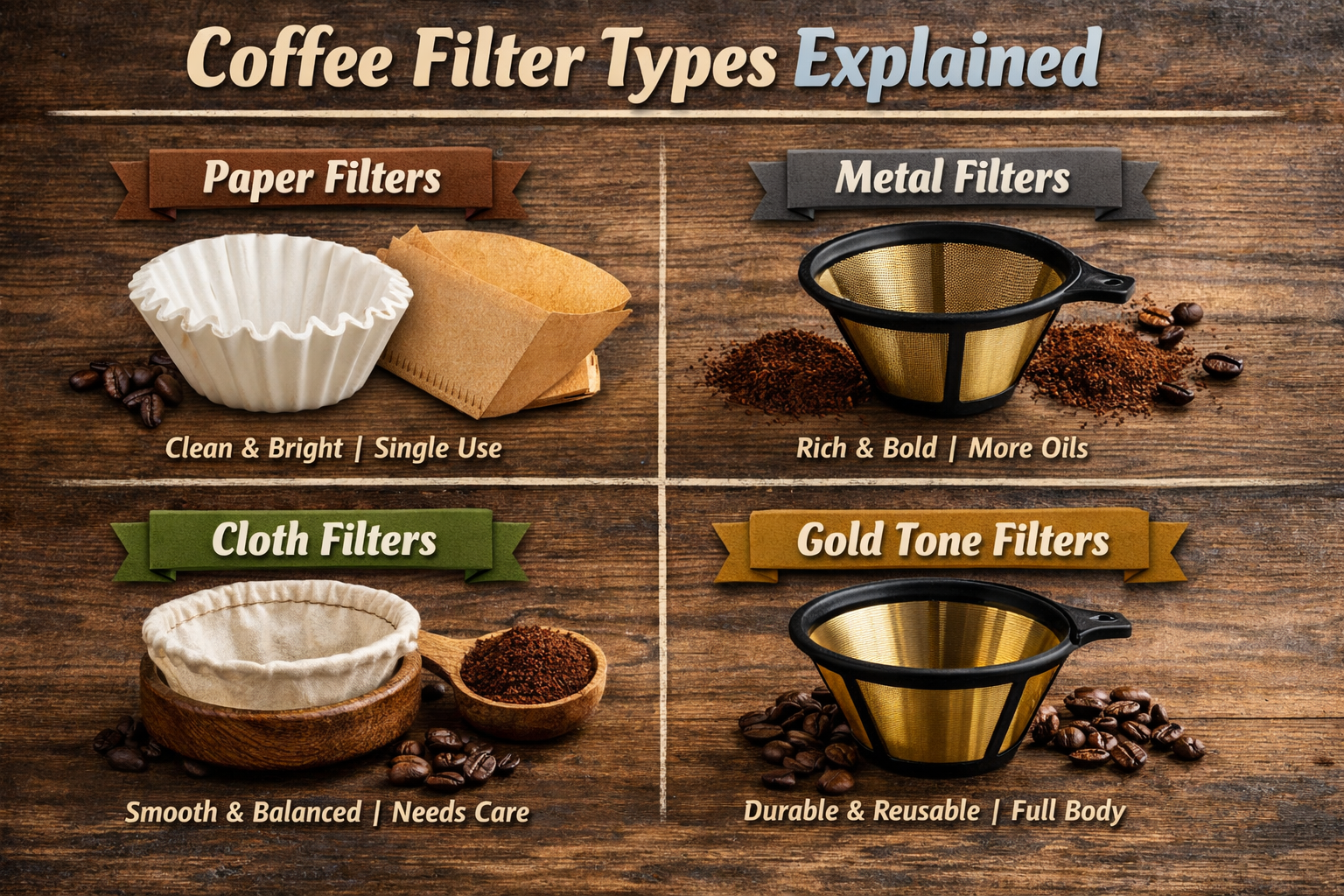
Not every coffee filter is made for the same purpose. Some are better for taste clarity. Some are better for boldness. Some are better for convenience or long term savings.
Paper filters are the most common option for home brewers. They are widely used in drip coffee makers and pour over brewers.
They are excellent at trapping oils and fine sediment, which gives you a cleaner, lighter, smoother cup. If you prefer crisp flavor notes and less grit at the bottom of the mug, paper is usually the safest choice.
There are two main paper styles.
White paper filters are usually processed to remove the natural brown color. Many quality versions are oxygen cleaned and do not leave much flavor behind. In my experience, they often give the cleanest-tasting brew with the least interference.
Brown filters are unbleached and often appeal to buyers who want a more natural or eco friendly option. They work well, but some lower quality versions can add a slight paper smell if you do not rinse them first. A quick hot water rinse solves most of that problem.
Metal filters allow more natural oils and tiny particles to pass into the cup. This creates a fuller body and richer mouthfeel.
That sounds great, but there is a tradeoff. You may also get more sediment, especially with a grind that is too fine. I often recommend metal filters to people who like stronger coffee and do not mind a less polished finish.
Cloth filters are less common, but they can make excellent coffee. They tend to produce a cup that is cleaner than metal but fuller than paper.
The downside is maintenance. If cloth filters are not washed and dried properly, they can hold odors and affect future brews. They are rewarding, but they are not the easiest choice for busy users.
Gold tone filters are usually premium reusable metal filters, often built for durability and stable performance over time. They are a smart option for frequent brewers who want to stop buying paper filters every month.
A good gold tone coffee filter can last a long time, but only if you clean it thoroughly. Coffee oils build up faster than many people realize.
Filter Type | Best For | Taste Result | Cleanup | Cost Over Time | Reusable |
Paper Filter | Beginners, drip brewers, pour over users | Clean, bright, low sediment | Very easy | Ongoing cost | No |
Metal Filter | Bold coffee lovers | Rich, heavy, more oils | Moderate | Low long term cost | Yes |
Cloth Filter | Users who want balance | Smooth, full, cleaner than metal | Higher effort | Low long term cost | Yes |
Gold Tone Filter | Daily home brewers | Rich, consistent, full body | Moderate | Good long term value | Yes |
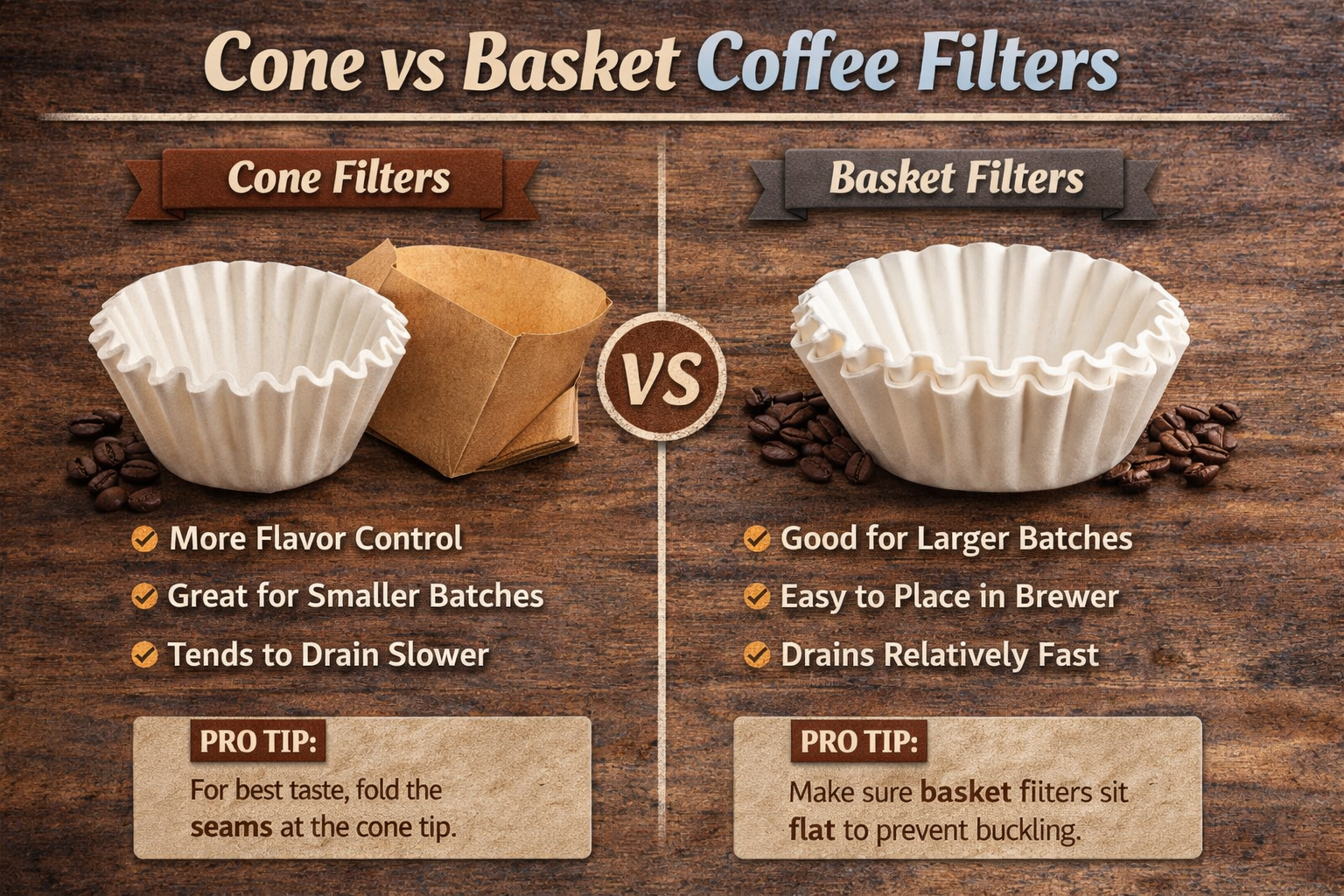
This is where many people make a buying mistake. They focus on material and forget shape.
Cone coffee filters are common in pour over brewers and many modern drip machines. Their pointed shape helps direct water through the center of the coffee bed. When used correctly, they often improve extraction consistency and flavor balance.
Common cone sizes include #1, #2, and #4.
In practice, I usually find cone filters better for smaller brews and people who care more about flavor detail than volume.
Basket coffee filters are flatter and wider. They are common in many standard drip machines, especially for larger home brewers. They work well for bigger batches and are generally easy to place in the brew basket.
However, if the size is wrong or the paper folds badly, they can bunch up and cause uneven flow, which can affect the taste of even the Best Coffee Beans for Home Brewing. If you brew for multiple people every morning, basket filters are often the more practical choice.
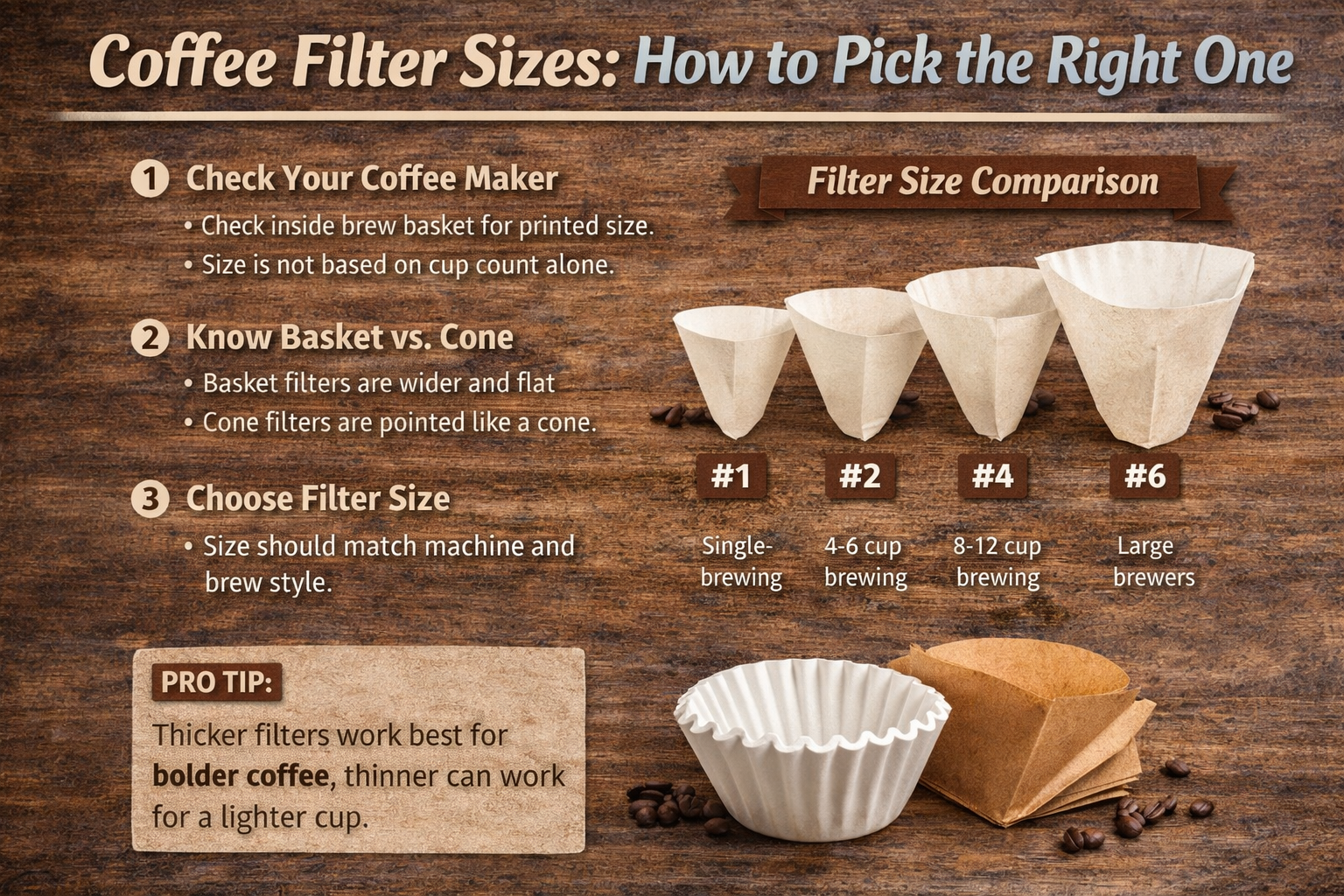
Buying the wrong size coffee filter is one of the fastest ways to ruin a brew. Overflow, weak extraction, collapsed paper, and grounds in the pot often start here.
Best for very small brewers and compact machines. These are useful for single users who brew small amounts.
Often used in mini drip coffee makers. Good for light coffee drinkers or small kitchens.
A reliable middle ground for small households. These are common in compact drip brewers.
Designed for medium to large home coffee makers. A good fit for families who brew regularly.
Usually found in full size drip coffee makers used for larger batches.
Cone Filter Size | Typical Use |
#1 | Single cup or very small pour over brewers |
#2 | Small brewers usually have a 2 to 6 cup range |
#4 | Larger brewers, often 8 to 12 cup range |
Check your coffee maker manual first. If that is gone, look inside the brew basket. Many machines print the size there. Do not guess based on cup count alone because one brand’s 10-cup machine may not use the same shape as another, especially if you switch between drip machines and methods explained in a detailed Pour Over Coffee Guide.
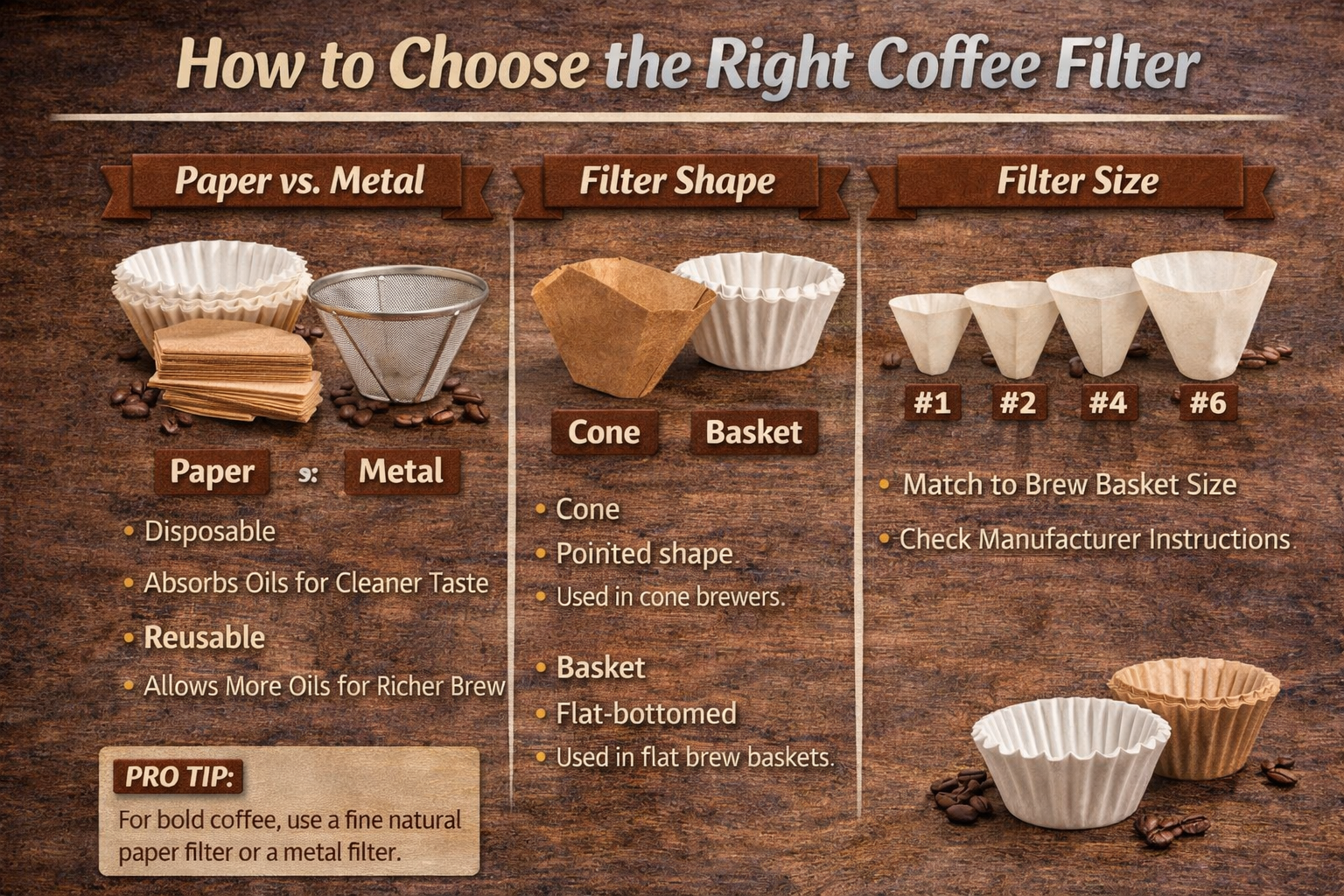
Choosing the best coffee filter depends on four things: your machine, your taste preference, your routine, and your budget.
A pour over brewer usually needs a specific cone filter. A flat bottom drip machine usually needs a basket filter. A reusable filter must fit the basket shape and depth correctly.
Never assume “universal” always means ideal. I have tested universal replacements that technically fit but caused uneven brewing because the sides were too loose.
If you want clean and smooth coffee with little sediment, go with paper.
If you want more body and oils, choose a metal or gold tone.
If you want something in between and do not mind extra care, cloth can work very well.
Paper filters are easy. Use one, throw it away, move on.
Reusable filters save money over time, but they require proper cleaning. If you know you will not rinse and deep clean them regularly, paper may still be the better option for you.
Cheap paper filters are fine for many people, but very thin ones can tear or collapse. Premium paper filters cost more, yet often give more reliable results.
Reusable filters cost more upfront, but frequent brewers often recover that cost over time.
Use a white paper coffee filter. It is simple, clean, forgiving, and easy to replace.
Use basket paper filters in the correct size for your drip machine. They are fast, practical, and dependable.
Use quality cone paper filters. They provide better clarity and cleaner flavor separation.
Use a reusable metal or gold tone coffee filter if you are comfortable cleaning it properly.
Look at reusable metal filters or biodegradable, unbleached paper options.
A good coffee filter only works well if you use it properly. Small mistakes here can change the entire cup.
Before brewing, make sure the coffee filter matches your machine. A basket filter should sit flat without bunching. A cone filter should fit snugly without collapsing inward.
Pro tip: If the paper looks too tall or too tight before brewing starts, it is probably the wrong size.
Rinse paper filters with hot water before adding coffee, especially brown or cheaper filters. This helps remove papery smell and warms the brewer.
Pro tip: Always discard the rinse water before brewing.
Use the grind size recommended for your brew method. Too fine and the filter may clog. Too coarse and water may pass too quickly.
Pro tip: If your coffee is both weak and bitter, the issue may be uneven grind plus poor filter flow.
Do not fill the filter to the top with grounds. Leave enough room for water flow and expansion.
Pro tip: Overflow often looks like a machine problem, but it is frequently a filter plus overfill issue.
Watch the first minute of brewing. If water pools badly, the filter folds, or grounds climb the sides, something is off.
Pro tip: One test brew tells you more than guessing. Pay attention to the flow speed and how the used filter looks afterward.
Many coffee filter problems come from simple habits that people never question.
These are the small details I have found most useful in real home brewing.
A quick rinse helps, but a more generous rinse often improves the result with lower cost paper filters.
A simple rinse is not enough forever. Oils build up and mute flavor. A proper deep clean restores performance.
If your machine uses a water filter, do not ignore it. Better water improves taste and also helps your coffee maker last longer.
Paper coffee filters absorb smells. If they sit near spices, cleaning chemicals, or stale pantry air, your cup can pick that up.
Running out of the right coffee filter often leads people to force the wrong one into the machine. That rarely ends well.
You can reuse some coffee filters, but not all of them in the same way. Paper filters are best treated as single use. In an emergency, you may reuse one once if it has stayed intact, but flavor quality usually drops.
Metal, cloth, and gold tone filters are made for repeated use. Still, reusable does not mean maintenance free. If you leave oils sitting in the mesh or cloth, your next brew may taste stale or sour, especially when you are using high-quality brewers from your favorite Best Home Coffee Makers.
Not automatically. Brown coffee filters are often chosen for environmental reasons. White filters are often chosen for the cleanest flavor profile. Both can work well.
The bigger difference is usually quality, thickness, and whether you rinse before brewing. A well made white filter and a well made brown filter can both produce excellent coffee.
Do not buy a coffee filter just because the packaging says premium. Look for fit, material quality, thickness, and actual user feedback. A cheap reusable filter with a poor mesh design can let too much sludge through, which can completely change how different brews from your favorite Types of Coffee Drinks actually taste. A poorly made paper filter can also split under heat and water pressure.
Also, avoid using damaged filters. Torn paper or bent reusable mesh can lead to grounds in the coffee and inconsistent extraction, which affects both flavor clarity and overall experience. Good coffee does not always require the most expensive option. It requires the right option.
You can find coffee filters online and in local stores. Amazon, Walmart, Target, and many grocery stores carry common sizes and types. Local shopping is helpful for urgent replacement needs, but online shopping often gives a better variety and easier size comparison.
If you buy online, check three things before placing the order: shape, size, and number of filters in the pack. A low price per pack is not always the best deal if the quantity is small.
It depends on the taste you prefer. Paper filters usually give the cleanest and brightest cup. Metal filters give more body and oils.
It is not a good idea. Even a near fit can cause folding, overflow, weak extraction, or grounds in the coffee.
Yes, especially for daily brewers. But they only stay cost effective if you clean them well and use them long enough.
Both white and brown coffee filters are generally safe when bought from reputable brands. The bigger issue is taste preference and whether you rinse before use.
This usually happens because the size is wrong, the paper is too thin, or the water flow is too aggressive for the setup.
Not better for everyone. Metal is better for a fuller body and less waste. Paper is better for clarity, low sediment, and easy cleanup.
The right coffee filter can make average coffee taste noticeably better and good coffee taste more consistent.
It is one of the cheapest upgrades in home brewing, yet it affects flavor, body, clarity, and brewing reliability every single day. If you want the easiest path, start with a quality paper coffee filter in the correct size for your machine. If you want long term savings and fuller flavor, test a reusable metal or gold tone option and clean it properly.
The main lesson is simple: do not treat the coffee filter like an afterthought. It is a core part of the brew.



Contact Us Jump To Does Black Coffee Have Calories Real Truth About Fasting, Weight Loss & Health You switch to black coffee, thinking it is the safest drink for weight loss. No sugar, no milk, almost no calories. It feels like a smart move. But…

Contact Us Jump To How to Roast Coffee Beans at Home (Beginner to Pro Guide) A lot of people try roasting coffee at home with excitement, but the results often disappoint them. The beans either taste too bitter, too sour, or completely flat. The confusion…
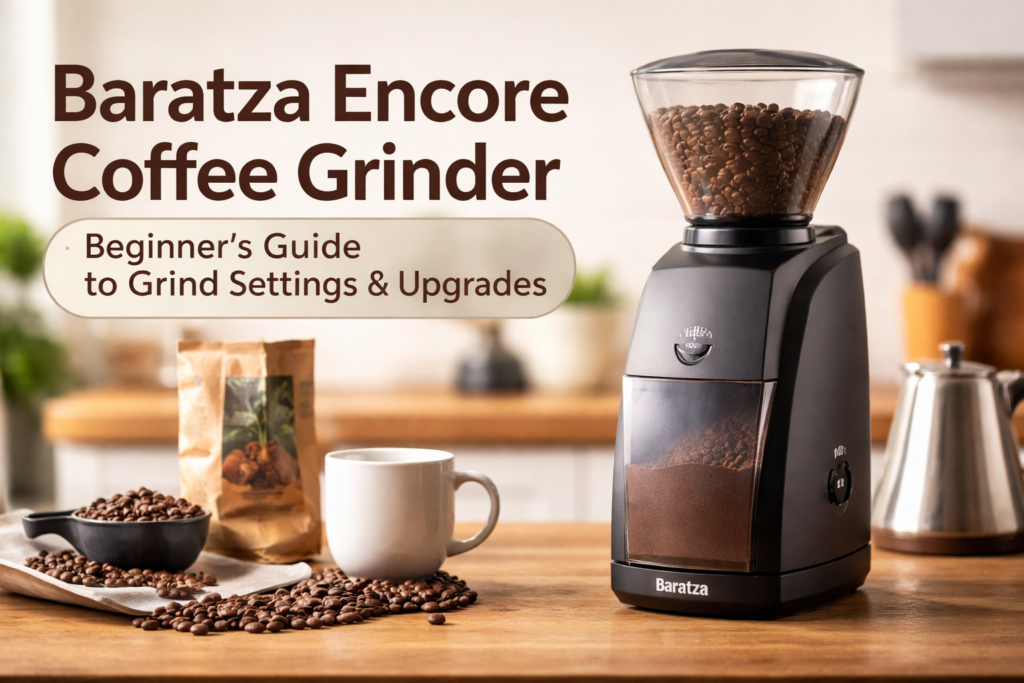
Contact Us Jump To Baratza Encore Coffee Grinder A Beginner Friendly Guide to Grind Quality, Settings, Upgrades, and Whether It Is Still Worth Buying You buy good coffee beans, follow a recipe, and still get a cup that tastes flat, bitter, or oddly sour. For…

Explore the world of coffee with honest reviews and practical advice. Find your perfect cup, one bean and machine at a time.